
Why Does Your Betta Die So Young? 7 Common Betta Care Mistakes

 Leia o artigo em português →
You bring home a beautiful betta, set up a small tank, feed him every day, and expect to enjoy his company for years.
Then, after a few weeks or months, something starts to change.
Your betta becomes less active. His colors seem duller. He spends more time resting, stops eating, or simply doesn't behave like he used to.
And eventually, the question comes:
“What happened? I thought I was taking good care of him.”
Here's the surprising part: betta fish are not necessarily short-lived pets. With proper care, Betta splendens can live for around 3 to 5 years.
So why do some bettas die much sooner?
Because many of the things that shorten a betta's life don't look dangerous at first.
In fact, some of them come from one of the most common misconceptions about this fish:
“Bettas are easy because they don't need much.”
Let's look at the seven most common betta care mistakes — and pay close attention to the last one, because it's often overlooked.
Before Anything Else: A Betta Is Not a “Bowl Fish”
Bettas are small, but that doesn't mean they can thrive in any container.
In the wild, Betta splendens is associated with shallow, slow-moving freshwater environments where vegetation and cover are part of the habitat.
A home aquarium should provide more than just enough water to keep the fish alive. It should offer stable water conditions, appropriate temperature, filtration, hiding places, and enough room to move naturally.
A larger, properly maintained aquarium is also generally more stable, making sudden changes in temperature and water quality less likely.
And that brings us to the first mistake.
1. Keeping Your Betta in a Tank That's Too Small
You've probably heard this one before:
“But he fits in there.”
That's exactly the problem.
Fitting somewhere and thriving there are two very different things.
Small containers can experience faster changes in water quality and temperature. Waste also becomes more concentrated, leaving less room for mistakes.
Veterinary guidance from PetMD recommends at least 2.5 gallons, or about 9.5 liters, while a 5 to 10 gallon aquarium provides considerably more room and stability.
The goal isn't simply to give your betta more water.
It's to create an environment that stays stable enough for him to live comfortably.

2. Letting Room Temperature Control the Water
Another common mistake sounds harmless:
“It's warm today, so the tank doesn't need a heater.”
The problem is that bettas are tropical fish.
PetMD recommends keeping betta water around 75–81°F (24.4–27.2°C).
But temperature isn't just about reaching a certain number. Stability matters too.
Your home may feel warm during the afternoon and become significantly cooler overnight. The water can follow those changes, especially in a small container.
A reliable aquarium thermometer and properly controlled heater can help keep the temperature within a suitable and stable range.
3. Assuming Clear Water Means Healthy Water
This may be the most deceptive problem of all.
Your aquarium can look absolutely crystal clear while containing substances that are harmful to your fish.
Ammonia and nitrite can become dangerous as fish waste and organic material break down in the aquarium.
That's why aquarium cycling is so important.
A properly established biological filtration system contains beneficial bacteria that help process toxic waste compounds.
Testing your water is therefore not an unnecessary extra step. It's one of the best ways to know what's actually happening inside the aquarium.
As a general target, the RSPCA recommends 0 mg/L of ammonia and 0 mg/L of nitrite.
Clear water may look healthy. A water test tells you whether it actually is.

4. Replacing All the Water at Once
“I'm going to clean the whole tank and make it spotless!”
The intention is good.
The problem is turning aquarium maintenance into a complete reset.
A healthy aquarium depends on beneficial bacteria living on surfaces and inside biological filter media. These microorganisms play an important role in processing waste produced by the fish.
When maintenance is done, new water should be treated to remove chlorine and chloramine and should be close to the aquarium's existing temperature.
It's also important not to rinse biological filter media directly under untreated tap water, as chlorine can damage the beneficial bacteria living there.
Good aquarium maintenance isn't about making everything sterile.
It's about keeping the ecosystem stable.
5. Overfeeding Your Betta
Your betta swims toward you.
You look at him.
He looks back.
And suddenly you think:
“He must be hungry.”
Maybe. But probably not as hungry as he looks.
Overfeeding is one of the easiest mistakes to make. Uneaten food can break down and contribute to poor water quality, while an inappropriate diet can also affect your fish's health.
A good rule is to offer a small amount that your betta can consume quickly and avoid leaving excess food floating around the tank.
Bettas are carnivorous by nature and should receive a nutritionally appropriate diet designed for their needs.
Sometimes better care means something surprisingly simple:
feeding less, not more.

6. Using a Filter With Too Much Current
Yes, your betta needs filtration.
No, his aquarium doesn't need to feel like a washing machine.
Strong water flow can make it difficult for a betta to swim comfortably, especially for fish with long, elaborate fins.
The ideal setup provides effective filtration while keeping the current gentle and manageable.
Sponge filters and adjustable low-flow filtration systems can work well for betta aquariums.
The goal isn't to create a miniature river.
It's to keep the water healthy without forcing your fish to fight the current every time he wants to swim.
7. Forgetting to Give Your Betta a Place to Feel Safe
And now we get to the mistake many people don't think about at all.
An aquarium can have good water quality, the right temperature, and proper food — and still be a poor environment.
Bettas benefit from plants, safe hiding places, resting areas, and decorations without sharp edges.
Plants and other structures can also provide visual cover, giving the fish places to explore and rest.
It's equally important to keep access to the water surface clear. Bettas have a specialized labyrinth organ that allows them to breathe atmospheric air.
And there's another important rule:
Male bettas are territorial and should not simply be housed together.
A good betta aquarium doesn't need to be packed with decorations.
It needs to be designed around the fish's needs.

Video: What Does a Proper Betta Aquarium Look Like?
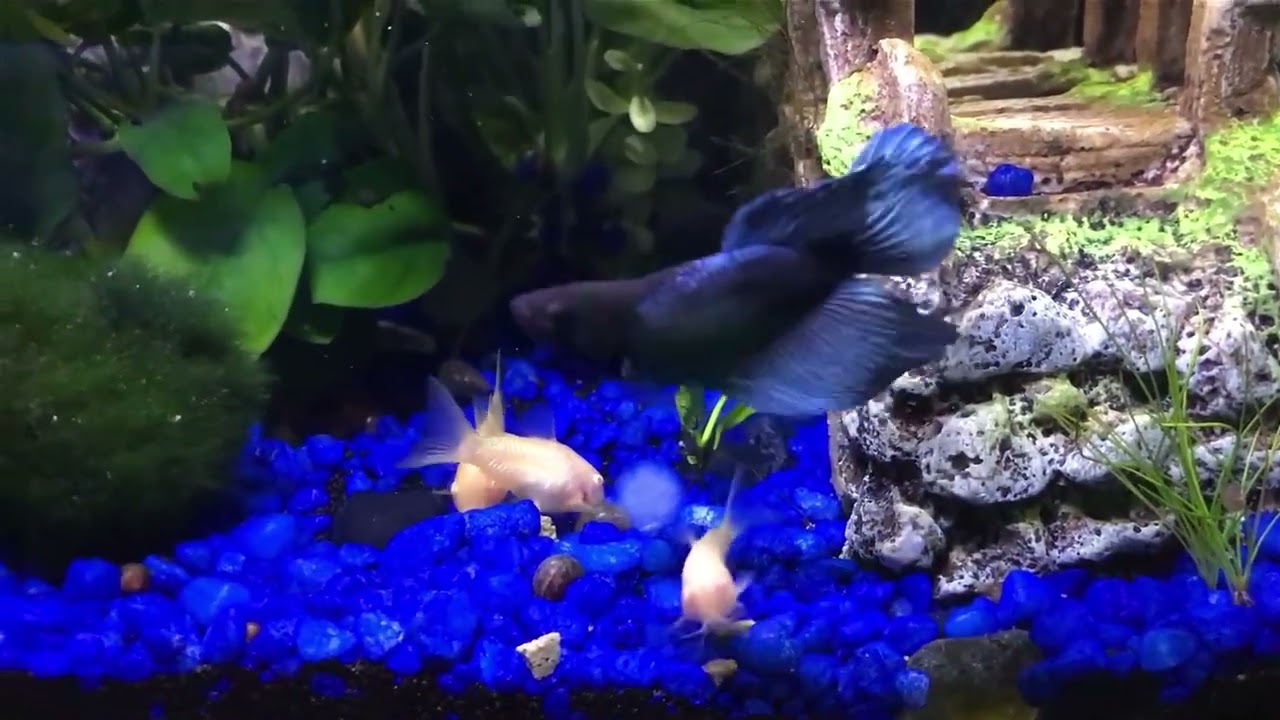
A healthy betta should have enough space to swim, gentle water flow, plants, shelter, clean water, and easy access to the surface.
So, How Long Should a Betta Fish Live?
A well-cared-for betta can live for approximately 3 to 5 years, although individual lifespan can vary.
That's why when a betta dies after only a few months, it's worth looking beyond the idea that the fish was simply “fragile.”
Sometimes the problem was hiding in the environment all along:
- Unstable water temperature
- Poor water quality
- A tank that's too small
- Overfeeding
- Excessive water flow
- A lack of shelter and enrichment
- A combination of several small mistakes
There's one more thing worth remembering: not every health problem can be fixed simply by improving the aquarium.
Loss of appetite, deteriorating fins, unusual spots, abnormal growth, difficulty swimming, or major changes in behavior can be signs that something is wrong and may require evaluation by a veterinarian experienced with fish.
The Secret Isn't a Beautiful Aquarium. It's a Stable One.
Your betta doesn't need a palace.
But he does need an environment that actually works for him.
Stable water conditions, an appropriate temperature, gentle filtration, proper nutrition, enough space, plants, and safe hiding places matter far more than simply choosing the most beautiful fish at the store.
And perhaps that's the biggest change in perspective for anyone keeping a betta:
Don't just think about the size of the fish. Think about the size and quality of the world you're giving him.
That tiny, colorful fish swimming across your aquarium may look delicate, but with the right care, he can become a companion for years rather than months.
Sources
-
PetMD — Betta Fish Care Sheet
Veterinary information covering betta habitat, temperature, feeding, water quality, and lifespan. -
PetMD — Betta Fish Facts
General information about Betta splendens, behavior, and care requirements. -
RSPCA — Choosing an Aquarium for Pet Fish
Guidance on aquarium size, filtration, cycling, water quality, and temperature. -
RSPCA — Freshwater Fish Care Guide
General guidance on freshwater fish welfare and aquarium maintenance. -
RSPCA — Pet Fish Health
Information about fish health issues related to water quality, temperature, and aquarium conditions.